 Mangystau Tours
Best Time to Visit Mangystau: Month-by-Month Guide
The best time to visit Mangystau is April to May or September to October, when daytime temperatures sit in a comfortable range and the jeep tracks across the plateau are at their driest. The runner-up window is early spring, workable but wetter underfoot. The window to avoid, if heat is what breaks a trip for you, is July and August, when the plateau regularly runs above 40 C. None of that rules out the other months entirely, and the reasons why are below.
Quick answer
April to May and September to October are the best time to visit Mangystau: daytime temperatures land in a comfortable range, the ground has dried out from spring rain, and the wind has not yet turned bitter. Late June through August is workable but hot, with daytime highs often above 40 C on the plateau. Winter tours run, but camping at around minus 5 C in an open, windy landscape is a different kind of trip than the one most travellers picture.
Key takeaways
- April to May and September to October are the two comfortable windows. Compare the tours that run in them
- Early spring is the honest runner-up: green steppe, but March ground is often too wet to drive well
- July and August regularly exceed 40 C on the plateau, hotter than the Aktau coastal figures below
- Winter tours are not cancelled, but camping at about minus 5 C with wind is worth planning for, not stumbling into
- Summer trips are not called off for heat, they are rescheduled around it: walking moves to sunrise and sunset
- Aktau's coastal average high runs from 2 C in January to 32 C in July, and the plateau itself runs hotter in summer
Seasons at a Glance
How to read the Verdict column
The Verdict column below is the short answer for each stretch of the year. Ground and driving conditions matter as much as temperature here, because the routes to Bozzhyra and Torysh are unpaved and change with rain, so a warm month with soft ground can be a worse trip than a cooler month with a firm track.
| Season (months) | Day and night temperatures | Ground and driving conditions | Crowds | Verdict |
|---|---|---|---|---|
| Spring (March to May) | Day 20 to 30 C, night 10 to 15 C; March runs cooler | March often wet underfoot; mid-April to mid-May noticeably drier | Building, moderate | Good, mind the March mud |
| Summer (June to August) | Day often above 40 C, night near 30 C | Dry, hard-packed track; heat is the limiting factor, not mud | Lighter inland, busy on the Caspian beaches near Aktau | Hot but workable, not cancelled |
| Autumn (September to November) | About 25 C in September falling to about 10 C by November | Firm, dry ground; wind picks up through the season | Heaviest of the year | Best overall |
| Winter (December to February) | Day 5 to 10 C, night about minus 5 C; snow especially in January | Frozen or snow-patched ground, strong cold wind, dusk around 18:00 | Lowest of the year | Tours run, camping is serious |
Read across a full row before deciding, not just the temperature column. Autumn's ground conditions and light rain days are what actually push it ahead of a warmer month, not the number on the thermometer alone.
Spring (March to May): Green Steppe, Uneven Ground
The window that needs a caveat
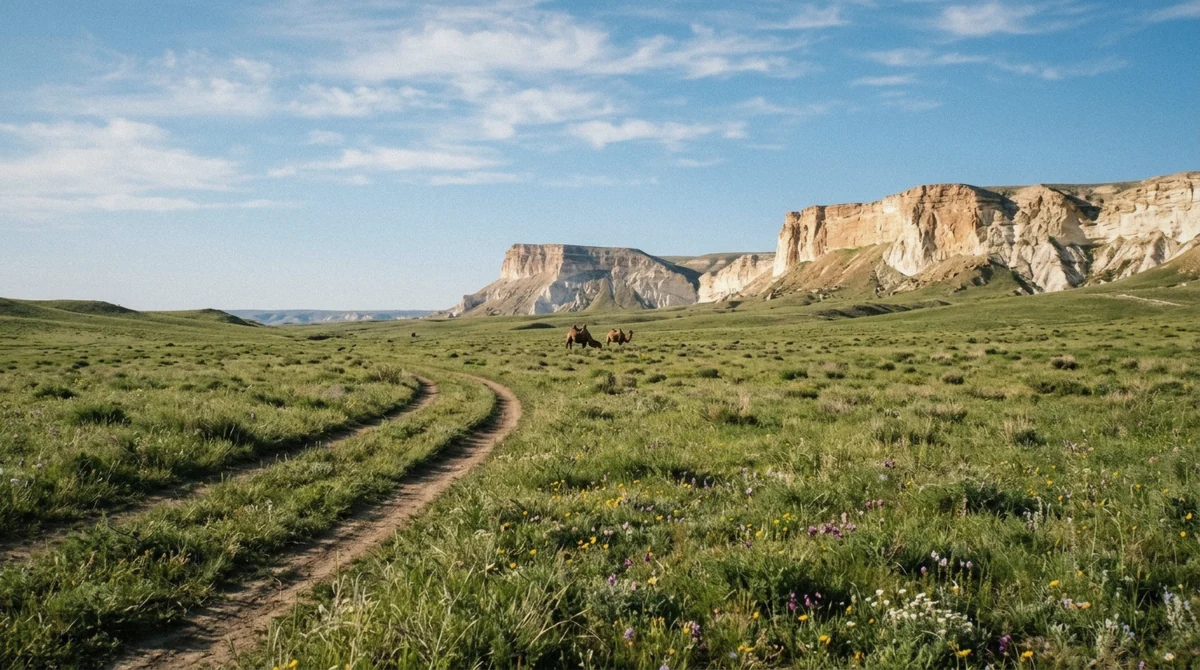
Spring is when the steppe turns green and the light is at its clearest, which is why photographers circle it on the calendar. Daytime highs run 20 to 30 C with nights around 10 to 15 C, and light rain falls on roughly 1 to 2 days a month. That single detail changes the whole month.
March is not the same trip as May. Travellers planning a March visit have flagged the same worry in forum threads: wet ground on unpaved tracks is not somewhere you want to get stuck. Mid-April to mid-May is the drier stretch of the season, and it is the version of spring worth booking around if the calendar gives you a choice.
- Daytime 20 to 30 C, nights 10 to 15 C
- Light rain on about 1 to 2 days a month, concentrated early in the season
- Booking lead time: a few weeks ahead is usually enough outside holiday weeks
- The 2-day tour with a yurt stay runs through this window and reaches both Bozzhyra viewpoints on day two
Summer (June to August): Hot, Not Cancelled
The trade-off nobody hides
Summer daytime highs often go above 40 C, with nights staying near 30 C. That is the least comfortable stretch of the year for walking around exposed chalk and limestone in the middle of the day, and it is honest to say so.
What does not happen is cancellation. Operators reschedule the day, not the trip: walking shifts to the sunrise and sunset hours, and the hottest part of the afternoon is spent moving between stops in an air-conditioned vehicle. The Samal Oasis stop on the shorter itineraries exists partly because it stays cool when everything around it does not.
- Daytime often above 40 C, nights around 30 C
- Walking moves to sunrise and sunset; midday is vehicle time
- Prices do not rise for summer scarcity the way they do around the golden autumn dates
- The 4-day Nomads of Mangystau tour still runs its full route in this window, timed around the heat
Autumn (September to November): The Golden Window
Why operators call it the golden time
September opens around 25 C and the month cools steadily to about 10 C by November, with nights sliding from 15 C toward freezing as the season closes. Regional operators describe the early part of this window, roughly plus 22 to plus 25 C, as the golden stretch, and it is the busiest time on the calendar for exactly that reason.
Wind is the trade-off. It picks up through the autumn and rare rain starts to show from late October, so a windbreaker matters here more than it does in spring. Booking lead time is the longest of the year in this window, since it overlaps with the best weather most travellers are chasing.
- About 25 C in September, falling to about 10 C by November
- Nights from around 15 C down toward freezing late in the season
- Wind increases through the season; rare rain from late October
- The 4-day private tour times its overnight stops around this calmer light
Winter (December to February): Cold, Real, Not for Everyone
The season most travellers skip, and why some don't
Winter daytime highs run 5 to 10 C with nights near minus 5 C, and snow shows up especially in January. Dusk arrives early, around 18:00, which shortens the usable day for driving on tracks that are already harder to read under snow.
Tours run through winter. What changes is the camping. A night at minus 5 C with wind across an open plateau is a genuinely different proposition from a summer or autumn camp night, and it deserves real cold-weather gear rather than a packing-list afterthought. This window suits experienced winter campers and travellers chasing an empty landscape more than first-timers.
- Day 5 to 10 C, night about minus 5 C; snow especially in January
- Dusk around 18:00, shortening the driving day
- The 3-day jeep tour camps two nights, which is a serious commitment in this window
- Fewest other travellers on the plateau of any season
Month by Month Temperatures
Aktau coastal averages, and why the plateau runs hotter
These are coastal averages for Aktau, typical daytime highs rather than a forecast for any single trip. The Ustyurt plateau, away from the Caspian's moderating effect, runs hotter than these figures in summer and colder at night year round.
| Month | Average daytime high, Aktau coast |
|---|---|
| January | 2 C |
| February | 3 C |
| March | 8 C |
| April | 16 C |
| May | 23 C |
| June | 29 C |
| July | 32 C |
| August | 31 C |
| September | 25 C |
| October | 17 C |
| November | 10 C |
| December | 5 C |
January is the coldest month on this table and July the hottest at the coast. Out on the plateau, away from the Caspian, expect the summer numbers to run several degrees warmer still, which is the basis for the sunrise-and-sunset walking pattern described above.
What Actually Affects Conditions
It is the ground, not just the thermometer
Most travellers assume the calendar question is only about heat and cold. On the ground, it is just as much about whether the track is dry. Mangystau's routes to Bozzhyra, Torysh and the sacred sites are unpaved for most of their length, cut through chalk and clay that turn to grip-free mud after rain and firm back up within a couple of weeks of dry weather.
That is the real reason March underperforms its temperatures on this page: light rain of 1 to 2 days a month is not much on paper, but on clay track it is enough to change the trip. A traveller planning a March visit summed it up in a forum thread: this is not a place you want to be stuck in mud. By mid-April the ground has usually firmed up, which is the physical mechanism behind the spring window closing the gap with autumn rather than the temperature alone doing the work. The sharply continental climate compounds this: days heat fast under an open sky and nights lose that heat just as fast once the sun drops, which is why layering matters in every season on this table, not only winter.
Best Time of Day
Morning has the advantage nearly every month of the year: the light is softer for photographs, the wind is usually calmer, and in summer it is simply cooler before the heat builds through the middle of the day. Departures on the day trip and the multi-day itineraries alike are built around an early hotel pickup for exactly this reason.
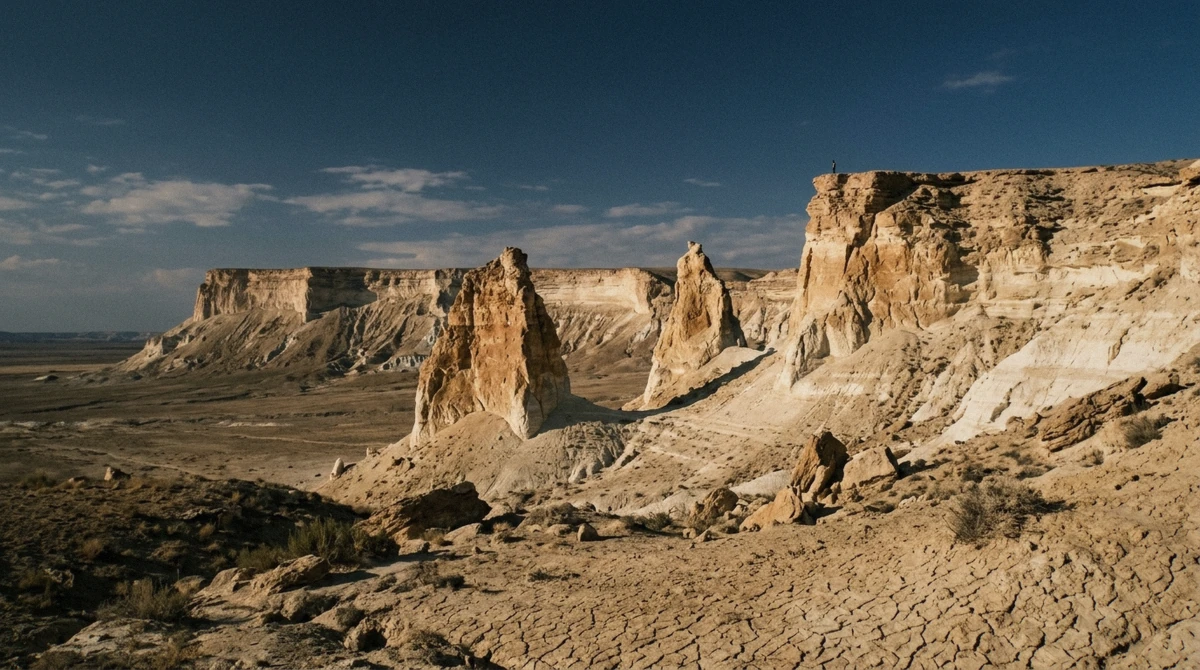
The one exception worth naming is the multi-day trips that camp at Airakty or on the Bozzhyra rim, where the point is sunset one evening and sunrise the next morning, both booked into the schedule rather than left to chance. The 2-day tour with a yurt stay reaches both Bozzhyra viewpoints on its second morning for exactly this light.
Best Season by Traveller Type
If you are chasing the clearest light for photographs
September and October, when the wind is lighter than late autumn and the crowds have not yet peaked
If this is your first trip to Mangystau and you want the safest bet
late April to mid-May: comfortable temperatures and dry, driveable ground, the least likely window to be derailed by weather
If you are travelling on a tight budget
summer, June to August: fewer other travellers competing for dates, though the heat is the honest trade
If you genuinely hate heat
September through November, once temperatures have dropped from the summer peak but before winter camping becomes the main event
If you plan to rent a 4x4 and drive yourself
mid-April to mid-May or September to October, when dry ground matters most without a driver who already knows the current track
So, When Should You Go?
April to May and September to October are the two windows that combine comfortable temperatures with dry, driveable ground, and September to October is the stronger of the two on crowd-adjusted comfort. Early spring is a reasonable runner-up if your dates fall in late April or May rather than March. The month to avoid, if the plateau above 40 C is a dealbreaker for you, is July and August, though operators run every one of these tours through summer by moving the walking to the edges of the day.
Whatever window you land in, pack for both extremes: hot exposed hours by day and a fast drop in temperature once the sun goes down and the wind picks up. What to pack for a Mangystau tour covers that in full, and if you are still deciding whether the region is worth the trip at all, is Mangystau worth visiting is the honest answer to that question. Whichever month you settle on, the Mangystau tours from Aktau page is where the actual dates and vehicles live.
Timing Questions
Is it too hot to visit Mangystau in July?
Hot, not impossible. Daytime highs often exceed 40 C on the plateau in July, but tours do not cancel for it. Walking is moved to sunrise and sunset, the middle of the day is spent in an air-conditioned vehicle, and stops like the Samal Oasis are timed for the hottest hours.
What is the coldest month in Mangystau?
January, when daytime highs sit around 5 to 10 C, nights drop to about minus 5 C, and snow is most likely. Coastal Aktau's own January average high is just 2 C, and the plateau runs colder at night than the coast year round.
Does it rain much in spring?
Not much by volume, but enough to matter. Light rain falls on roughly 1 to 2 days a month across spring, and on the unpaved tracks to Bozzhyra and Torysh that is enough to turn clay to mud, especially in March. Mid-April to mid-May is the drier stretch of the season.
Is winter camping in Mangystau realistic for most travellers?
It is realistic for travellers experienced with winter camping, and a harder sell for everyone else. Nights run around minus 5 C with wind across open ground and no shelter, which is a different trip from a summer or autumn camp. Tours do run in winter; the gear list changes.
Are September and October really busier than summer?
Yes. The autumn window carries the heaviest crowds of the year precisely because it combines the mildest temperatures with dry, reliable ground. Booking further ahead matters more in September and October than in any other month.
Does the heat affect which tour length I should book?
Not directly, but it affects comfort on the longer trips more than the short ones. The 12-hour day trip compresses the exposed walking into one day regardless of season, while multi-day trips in July and August lean harder on the sunrise-and-sunset schedule to keep midday manageable.
When do the multi-day tours shift their walking hours for heat?
Through the summer stretch, June to August, once daytime highs are regularly above 40 C. Outside that window, spring and autumn schedules run closer to a normal daytime pace, with early starts mainly to beat the crowds rather than the heat.
None of these windows is wrong so much as different. The plateau in January photographs like another planet and empties out; the same plateau in April is green and forgiving underfoot; September buys the mildest air of the year at the cost of sharing it with everyone else who worked out the same thing. Pick the trade-off that matches what you actually want from the trip, then book the length that reaches it.